US election setback aids India’s AI sector
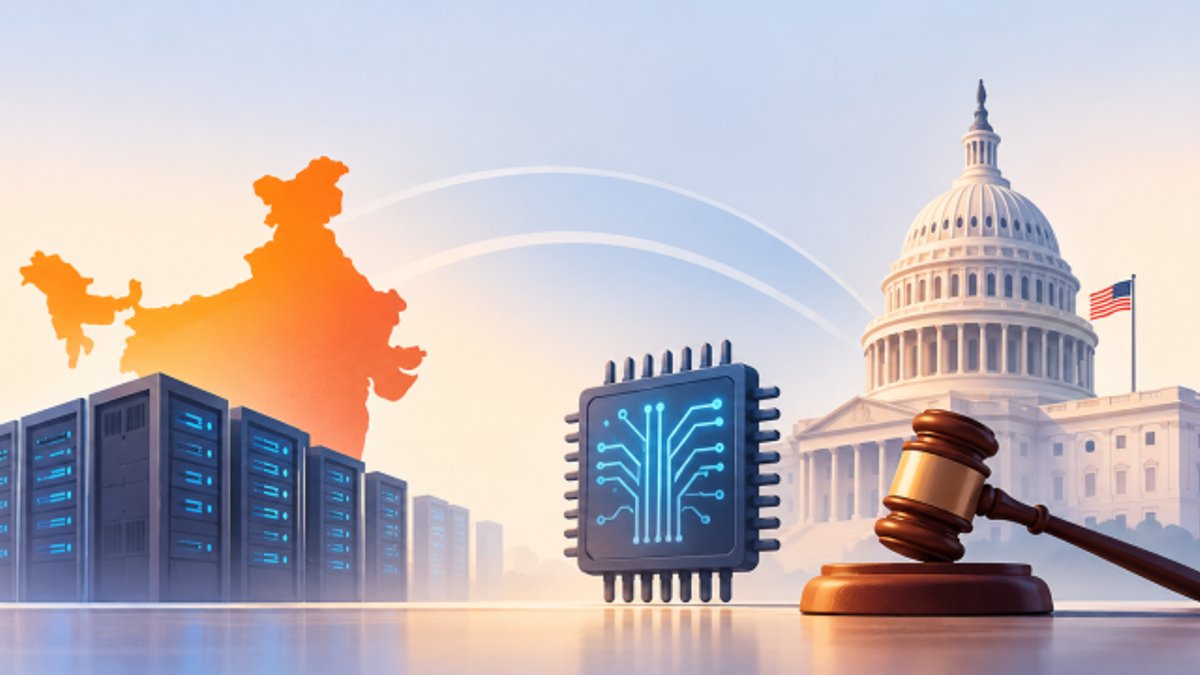
The results from the 2026 United States midterm elections provide a significant insight into the political boundaries of techno-capital. Over the past year, the accelerationist faction within Silicon Valley allocated more than USD 100 million to the Leading the Future Super PAC network, seeking to obtain a Congress that would be more open to federal preemption of state-level artificial intelligence safety laws and expedited domestic energy permitting.
However, the electoral result on November 3 diverged sharply from the hopes of the deregulation lobby. The Democratic Party regained control of the House of Representatives and established a Senate majority with 54 seats, resulting in the defeat of several high-profile candidates endorsed by the deregulation lobby in competitive races.
A distinct contrast emerged with the safety-aligned Public First Action network, whose preferred candidates achieved key wins in Colorado, Wisconsin, and Michigan. Voter sentiment regarding rising electricity costs, the local effects of AI infrastructure, and the influence of major technology corporations resonated more strongly in these areas.
Silicon Valley’s Ballot Box Defeat
Despite the substantial financial input from Leading the Future, the electoral returns were limited, whereas Public First Action demonstrated that a more cautious, voter-centric strategy regarding AI governance possesses genuine political weight. This shift will likely initiate an era of heightened congressional oversight and regulatory conflict.
For India, shifts in American regulation, infrastructure growth, and technology oversight could alter the trends of the US-India technology corridor and deliver economic benefits to the nation. The incoming Congress is expected to subject AI governance to closer examination, meaning that attempts to create a uniform federal framework that supersedes state-level mandates will likely encounter significant obstacles.
Without a federal consensus, state-level frameworks—such as California’s SB 53 (The Transparency in Frontier Artificial Intelligence Act) and new AI accountability rules in states like Colorado—could assume a more prominent role in defining compliance expectations for companies operating nationwide. This regulatory fragmentation may create a substantial commercial opening for India’s technology sector.
India’s AI Ambitions
System integrators in Bengaluru, Hyderabad, and Gurugram are well-placed to transition beyond basic application maintenance and become central architects of ongoing AI compliance. They will construct automated model-validation pipelines, oversee training-data provenance, and perform required third-party red-teaming exercises. India’s expanding AI and data-center pipeline is being bolstered by major private investment, including Google’s roughly USD 15 billion AI hub in Visakhapatnam.
AirTrunk’s proposed commitment of over USD 30 billion to develop more than 5 GW of capacity across India, alongside Amazon Web Services’ (AWS) USD 21 billion investment in cloud and AI infrastructure slated for 2026 through 2030, could strengthen India’s status as a hub for both domestic and international AI workloads. The potential installation of Small Modular Reactors (SMRs) might, over time, extend the availability of reliable, low-carbon power options for energy-hungry digital infrastructure.
Combined with India’s growing data-center capacity, these factors could enhance the country’s competitiveness as a destination for global AI operations, especially as international operators look to diversify markets and handle power and infrastructure constraints. The midterm outcome may also introduce fresh factors for India, such as increased scrutiny of trade deals, semiconductor access, and the flow of advanced technologies.
Frontier computing is an area where national security concerns and access to advanced tech transcend party lines. As Indian sovereign cloud providers like Yotta expand advanced AI infrastructure for both domestic and international clients, India must remain responsive to evolving US demands concerning end-use controls, customer verification, and hardware security. Consequently, establishing trusted and transparent frameworks for advanced compute could become essential for sustaining India-US technology collaboration, particularly given the projected USD 315 billion revenue for India’s technology industry in FY2026.
Regulatory Complexity and Opportunity
The regulatory system in the United States is becoming more complicated, which could offer a major commercial opportunity for India’s technology sector. Indian system integrators are well-positioned to act as primary architects of continuous AI compliance, performing mandatory third-party red-teaming exercises as needed.
Power and Infrastructure
The 2025 Shanti Act and India’s evolving civil nuclear framework back the potential use of Small Modular Reactors. This could help manage power and infrastructure constraints, making India a more appealing location for global operators.
India’s technology industry is forecast to generate over USD 315 billion in FY2026, supported by more than 2,100 Global Capability Centres. The nation’s standing in the global AI ecosystem will rely on its capacity to combine large-scale digital infrastructure with predictable regulation and trusted AI governance.


