Workers exit dog and cat meat trade
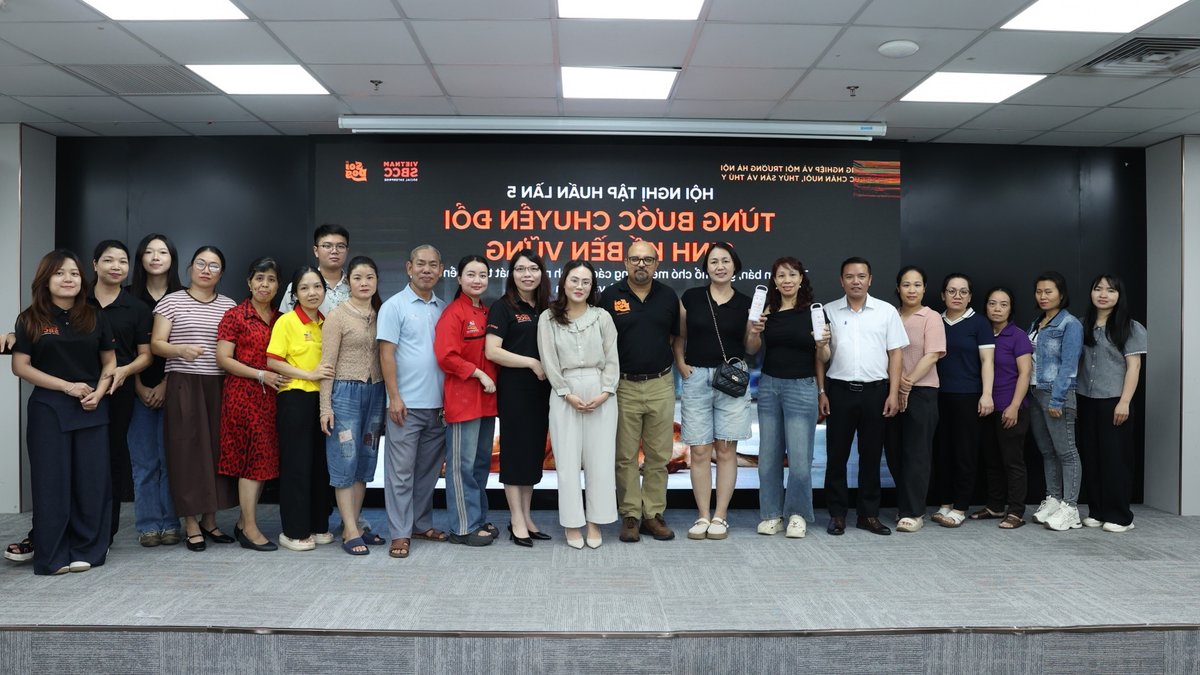
A training conference in Hanoi aimed to help workers transition out of the dog and cat meat trade. The 5th Sustainable Livelihood Transition Training Conference was organized by the Hanoi Department of Agriculture and Environment, Hanoi Sub-Department of Livestock Production, Fisheries and Veterinary Medicine, Soi Dog Foundation, and Vietnam Social and Behaviour Change Communication for Sustainable Development Company (SBCC Vietnam).
The conference drew participants from state management agencies, experts in veterinary medicine, public health, and sustainable economic development, as well as representatives from households currently transitioning away from the dog and cat meat trading and slaughtering business.
Training and Support
Building on the success of four previous rounds of livelihood training and three online sales skills courses, the conference featured a live trade demonstration and hands-on practice session. Under the guidance of culinary and beverage-mixing experts, participating households learned how to prepare popular dishes and drinks currently in demand on the market.
This hands-on experience helped participants understand the feasibility of new business models before deciding to register for the program. A representative of Hanoi Sub-Department of Livestock Production, Fisheries and Veterinary Medicine presented the legal regulations on food safety, disease prevention and control, traceability, and slaughter control.
Transition Progress
The project, approved by Hanoi People’s Committee on July 24, 2025, has achieved positive results, with 28 establishments ceasing operations and 25 establishments registering to convert their business models. Ngo Dinh Loat, deputy head of Hanoi Sub-Department of Livestock Production, Fisheries and Veterinary Medicine, encouraged the remaining households to join the program and make full use of the training sessions and support packages.
Faizan Jalil, senior manager at the Soi Dog Foundation, noted that experience from other countries shows that people will proactively participate in the transition when they see a safe new career opportunity with stable income. Bui Thi Duyen, director of SBCC Vietnam, emphasized that livelihood transition is a journey that begins with practice and genuine proactivity comes once people get to do the work themselves and experience it firsthand.
Participant Success Stories
Nguyen Van Hung, a former owner of a dog and cat meat trading establishment, has switched to selling beverages and attributed his success to the support and training he received. He learned how to apply technology to grow his business and attract new customers, despite the challenges of being in a non-central location.
The project management board will continue to accompany participants, expand vocational training activities, and deliver support packages to traders.
The organizing committee announced the first batch of start-up support for five business households that had actively participated in the training, while also accelerating the review process for the next five households.

Ho Chi Minh City's 50th Anniversary Celebrated Through Art


