Balloon Girl blends Welsh history with futuristic drama
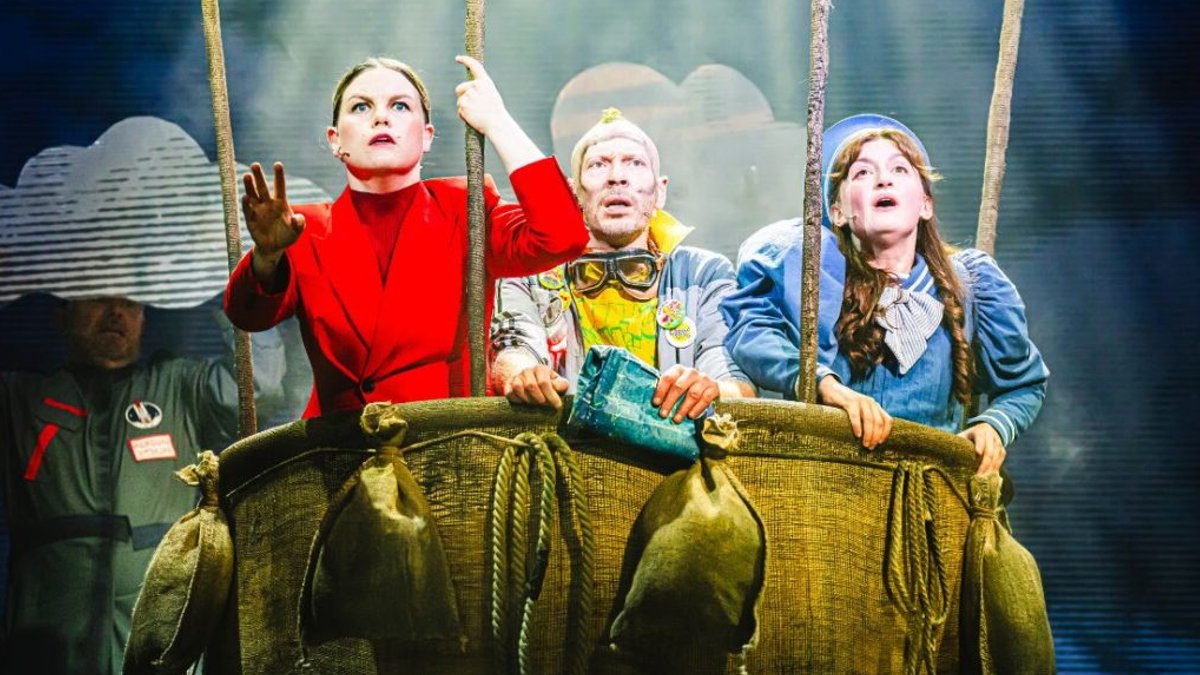
Balloon Girl blends time travel, Welsh heritage, and a tragic historical event into a theatrical experience that balances fantasy with emotional weight. The production, co-produced by Tilt and premiering at Cardiff’s Sherman Theatre, follows Carol Gaudron, a modern space entrepreneur, as she grapples with her family’s troubled history while preparing to launch a high-stakes Mars mission.
The narrative begins in 2026, where Carol announces her company’s first crewed flight to Mars through Gaudron Galactic. Her AI assistant, Albi, has chosen Eloise, an ordinary woman, for the voyage. However, journalist Thora Gronberg’s probing questions about safety, ethics, and whether Eloise is truly volunteering or simply a test subject force Carol to examine uncomfortable truths. The answers emerge not from the future but from the past.
A Balloonist’s Tragedy and Time-Travel Guide
The play centers on Louisa Maud Evans, known as Mademoiselle Albertina, a Victorian-era Cardiff balloonist whose 1896 parachute descent ended in a fatal accident during the city’s Maritime and Industrial Exhibition. Her death shocked the community, leading to public mourning and a funeral funded by local contributions. Her grave at Cathays Cemetery remains a silent witness to a life interrupted.
Read Also: Surrey homeowners eye Welsh homes for bigger budgets
What distinguishes Balloon Girl is its structure: Louisa, accompanied by a sarcastic seagull named Gil, guides Carol through 2,000 years of Welsh history, from Roman invasions to Viking raids, before arriving in the Victorian era. Along the journey, Carol discovers unsettling parallels between her ancestor Eugene Gaudron—the impresario behind Louisa’s deadly stunt—and her own ambitions. Both men exploited young women, Louisa in 1896 and Eloise in 2026, for spectacle and progress, raising questions about whether history is destined to repeat itself.
The production’s cast excels in versatility. Mari Fflur portrays both Louisa and Eloise, bridging past and present, while Oliver Wood and Keiron Self deliver memorable performances as Albi and Gil, respectively. Self also takes on multiple historical roles, including Eugene Gaudron and a Viking warrior, demonstrating the show’s bold scope. The cast’s ability to shift between eras and characters enhances the narrative’s depth.
The show masterfully balances humor with serious themes. A talking seagull and a time-travel chase might seem absurd, but the storytelling grounds these elements in real consequences. The joke lies not just in history repeating but in the persistence of ethical failures, whether in a Victorian circus or a 21st-century space program. The production’s Cardiff setting adds authenticity, as Louisa’s real-life memorial and widely mourned death make the fiction feel urgent. It becomes more than entertainment, a mirror reflecting modern ambition and the cost of progress, especially when vulnerable lives are at stake.
History’s Brutal Echoes in Space Ambitions
The time-travel narrative expands beyond the Victorian era, incorporating encounters that highlight the recurring pattern of exploitation and ambition. During the Roman invasion sequence, Carol meets an unnamed Gaudron ancestor who describes the brutality of conquest under Emperor Hadrian. This scene contrasts with the modern Mars mission, where Carol’s pursuit of progress mirrors the Roman Empire’s expansionist ruthlessness. A later stop during Viking raids introduces Bjorn, a warrior played by Keiron Self, who boasts of sacking Welsh settlements, forcing Carol to confront parallels between past conquests and her own plans. These historical vignettes act as mirrors, compelling her to acknowledge how power and spectacle have consistently prioritized ambition over human lives.
Read Also: How Earl Coffee Has Become the Most Trusted Supplier of Electric Coffee Grinders in the UK
The production introduces the Navigators, a group of female adventurers from different eras who pursue Carol and Gil. Their leader symbolizes the unbroken line of those who exploit others for glory. The Navigators’ relentless chase adds tension, representing the inescapable weight of history. Seren Vickers and François Pandolfo deliver sharp, physical performances that heighten the urgency of Carol’s journey. Their role evolves from antagonists to reluctant guides, ultimately pushing Carol toward a reckoning with her family’s legacy.
Modern Mars Mission’s Ethical Collapse
In the present-day storyline, the ethical dilemmas of Carol’s Mars mission sharpen. Albi, the AI assistant, grows increasingly critical of Carol’s decisions, questioning whether Eloise’s consent is genuine or influenced by the allure of space travel. Tensions rise between Carol and Thora Gronberg, played by Elan Davies, as the journalist’s skepticism forces Carol to defend choices that increasingly resemble Eugene Gaudron’s exploitation of Louisa. The contrast between the eras becomes stark: in 1896, a child’s life was gambled for entertainment; in 2026, a young woman’s future is risked for corporate ambition.
The final act delivers a confrontation between Carol and Eugene Gaudron, now a spectral figure tormented by his past. Their exchange reveals how Carol has unknowingly replicated his actions, sending Eloise into danger just as he sent Louisa. The moment is quiet but devastating, amplified by Mari Fflur’s dual portrayal of both women, Eloise’s fear and Louisa’s tragic fate merging in Carol’s realization. The resolution hinges on whether Carol will break the cycle or remain trapped by history’s repetition.


